
37 years in Finland: The temporality of asylum

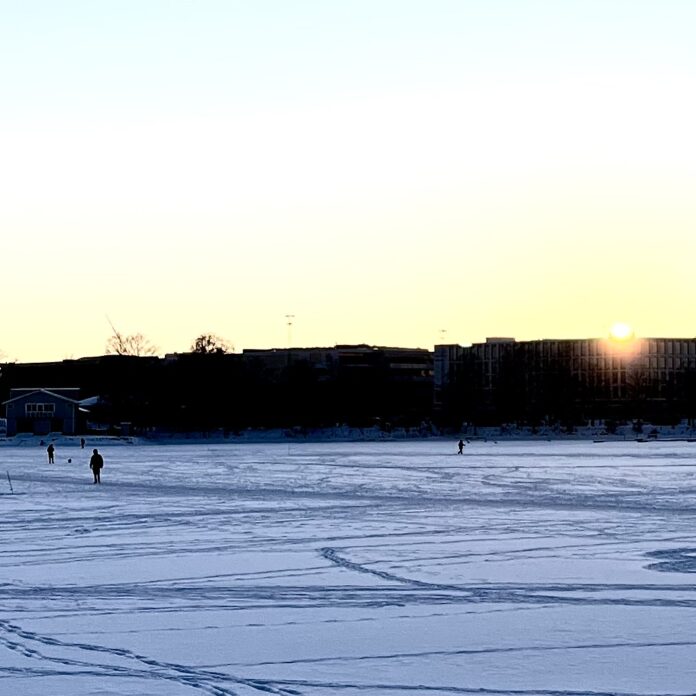
Snowy field at low light.
Image Credit: Erna Bodström
Lukuaika: 6 min.


by Erna Bodström

Asylum has traditionally been thought of as a form of long-term protection, but in recent years especially in Northern Europe and also Finland have experienced a so-called temporary turn. This means that there has been a tendency to use migration politics to make international protection more temporary in nature. This essentially changes the way the temporality of asylum has been understood and, in practise, it makes it more difficult and insecure for those with a right to international protection to build their new lives.

There are two reasons why asylum has been thought of as a form of long-term protection. First, the criteria for granting asylum in Europe are quite strict: asylum requires personal persecution for reasons such as ethnicity, religion, gender, sexuality, or political opinion – all matters that are a deep part of a person’s identity and that do not generally change overnight. Therefore, the persecution based on those conditions can be expected to be long-term, even lasting for the rest of the person’s life, unless their home country goes through significant and stable political changes for the better. Second, long-term protection has been a way to encourage integration, for example by encouraging language learning and employment. When a person must start their whole life anew, this requires time, stability and safety.

The temporality turn has been especially visible in Northern Europe and also in Finland (Brekke et al., 2020; Schultz, 2020; Bodström, accepted). There have been two kinds of efforts to make asylum more temporary. Asylum seekers have simply been granted fewer long term forms of protection, as Denmark did in the last decade with many Syrians by granting them temporary protection instead asylum. Since then, the EU countries have granted temporary protection for those fleeing the war in Ukraine. Originally, temporary protection could only be granted for a maximum of three years, but as the war has continued, the temporary protection has in practise also become more long term. This also points out the problematic nature of the temporary turn of asylum:  the timeline of international conflict or political changes can be difficult to predict.

Additionally, there have been efforts to make asylum more temporary by shortening the length of residence permits granted based on refuge and by reassessing the continued need for asylum more often. This has been the road chosen by Finland, and it speaks volumes to changing orientations to protection in Finnish asylum politics.

The temporary turn in Finnish asylum politics

In January 2025, Finland adopted a change to the Aliens Act, in which the length of residence permits granted to those entitled to international protection was shortened to the minimum allowed by EU regulations. While the length of the permits used to be four years, they are now, after the amendment, three years for those who have been granted asylum and one or two years for those granted subsidiary protection. In addition, the Finnish Immigration Service (responsible for both international protection and residence permits in Finland) was obligated to automatically investigate whether international protection is still needed every time a person renews their residence permit. Previously this has only been investigated when the Immigration Service assessed there to be a valid reason to suspect that international protection might no longer be needed. This is a significant change when it comes to the temporality of asylum, as it increases long-term uncertainty for those granted international protection (Bodström & Lyytinen, 2024).

The automatic reassessment had originally also been part of the New Pact on Migration and Asylum of the EU, but it was, in the end, excluded from the pact, as it was seen as inefficient. Still, Finland has ratified the reassessment as part of its asylum politics, and even in a stricter form than originally proposed in the EU pact. While the pact suggested assessing the continued need of international protection once or twice, the version adopted by the Aliens Act of Finland does not include such restriction; rather, the reassessment is apparently to be continued as long as the refugee is to renew their residence permit, meaning every one to three years, possibly to the end of the person’s life.

Removal of international protection in Finland

A central idea of the temporary turn of asylum is to enforce the temporality of refugeehood. Still, there is little research on how or even whether refugeehood truly ends. This is what I have studied in the Endings – Refuge, Time, and Space project by analysing the decisions of the Finnish Immigration Service about the removal of international protection status.

By international protection I refer to both asylum and subsidiary protection. Subsidiary protection is granted to people who do not meet all the criteria for granting asylum but who nevertheless cannot return to their home country without facing a serious risk of inhuman treatment. In order to remove the international protection status, the authorities have to show that the person is no longer in danger in their home country or that they have indeed never been in danger and, for this reason, international protection should not have even been granted in the first place. In the Finnish law these practices are referred to as cessation and revocation, respectively, and in this text I refer to them together as ‘removal’.

In the years 2015–2022 the Finnish Immigration Service made altogether 5600 decisions on the removal of international protection, of which approximately 2000 ended with removal; the others did not. (Information request from the Finnish Immigration Service, 2023 March). These investigations of removal had been conducted before the Amendment of the Aliens Act of Finland in 2025 came into force, meaning that all the investigations were started because the Immigration Service assessed that there was a reason to suspect that the grounds for the removal would be met. Still, in the end, two thirds of the cases determined that there were no grounds to remove the international protection status.

Based on my analysis, however, this is not due to a lack of effort by the Immigration Service – it is because there simply were no legal grounds for removing international protection. This implies that the removal investigations in themselves are quite inefficient – and that they were inefficient already before the law amendment that made them systematic. Indeed, the law amendment is likely to make the investigations even more inefficient, as they no longer even require a reason to suspect. This inefficiency – which challenges the temporary turn of asylum – suggests that the need for international protection indeed often tends to be long term.

Temporality in the removal of international protection

When authorities begin to examine the removal of asylum, the investigations take – based on my data – months or, in many cases, even years. During the investigation, the people whom it concerns end up in limbo. Receiving the information about the investigation interrupts their normal life, they are likely to experience anxiety and fear, and it is difficult for them to continue the routines of their everyday life or to plan for the future (e.g. Brekke et al., 2021). This affects the people and their loved ones throughout the investigation period – that is, months or even years – regardless of whether their international protection status is removed in the end (ibid.).

The investigation can start at any point of the person’s life. This means that the investigations can affect the lives of refugees years or even decades after they have settled in their new home country. In my data, the person who had resided in Finland the longest before their asylum was removed had been living in the country for 37 years. Because they had a permanent residence permit in Finland, they were not given a deportation decision, meaning that they were able to continue their life in Finland. Another person who had resided in Finland for 33 years was ordered to leave the country. They had, about ten years before the deportation decision, been convicted of serious crimes, but after that they had lived a law-abiding life in Finland. Both of these people had arrived to Finland when they were young, under 30 years of age, and they had both lived in Finland for most of their lives.

As the new amendments of the Aliens Act of Finland, related to the temporary turn, increase the investigations of the removal of international protection, it is also likely to add to the insecurity and uncertainty of refugees about their future lives in Finland. This is further impacted by the amendments to the Aliens Act and the Citizenship Act, which make getting a permanent residence permit and citizenship more difficult and lengthier. In practise, this means that a person entitled to international protection in Finland will be subjected to repeated investigations of removal and will have to live with uncertainty for longer than before – possibly for the rest of their lives. In the long term, this is likely to increase the number of people to be deported after having lived law-abiding lives in Finland even for decades.

References:

Bodström, E. (accepted). The removal of international protection as a process of administrative rebordering. International Journal of Refugee Law. https://doi.org/10.1093/ijrl/eeaf045

Bodström, E. & Lyytinen, E. (2024, June 17). Turvapaikkapolitiikan uusi suunta: Epävarmuuden paradigma [The new direction in the Finnish asylum politics: the paradigm of uncertainty]. Politiikasta. https://politiikasta.fi/turvapaikkapolitiikan-uusi-suunta-epavarmuuden-paradigma/

Brekke, J.-P., Vedsted-Hansen, J. & Thorburn Stern, R. (2020). Temporary Asylum and Cessation of Refugee Status in Scandinavia: Policies, Practices and Dilemmas. European Migration Network EMN. https://www.udi.no/globalassets/global/european-migration-network_i/emn-norway-papers/emn-occasional-paper-temporary-asylum-and-cessation-of-refugee-status-in-scandinavia-2020.pdf

Brekke, J.-P., Birkvad, S.R., & Erdal, M. B. (2021). Losing the Right to Stay: Revocation of Refugee Permits in Norway. Journal of Refugee Studies, 34(2), 1637–56. https://doi:10.1093/jrs/feaa006.

Schultz, J. (2020). Temporary Protection and the Erosion of Refugee Status. In C. M. Jacobsen, M.-A. Karlsen & S. Khoshravi (Eds.), Waiting and the Temporalities of Irregular Migration (pp. 170–185). Routledge.

***

Erna Bodström (D.Soc.Sc.) works as a Research Fellow at the Migration Institute of Finland, in the Endings – Refuge, Time, and Space project (funded by Kone Foundation, 2023–26) that studies how refugeehood ends – or whether it indeed does. Her research and expertise are related to asylum system, asylum assessment and asylum politics. The text is based on a presentation given by the author at the Symposium on Precarities and Temporalities in Migratory Contexts, organised at the University of Helsinki on 26-27 August 2025.

37 vuotta Suomessa. Turvapaikan ajallisuus

Snowy field at low light.
Image Credit: Erna Bodström
Lukuaika: 4 min.

Erna Bodström

Turvapaikkaa on perinteisesti ajateltu pitkäaikaisena suojelun muotona, mutta viime vuosina erityisesti Pohjois-Euroopassa ja myös Suomessa on ollut menossa ns. tilapäisyyden käänne (engl. ”temporary turn”). Kansainvälisestä suojelusta on siis pyritty tekemään entistä määrä- ja lyhytaikaisempaa maahanmuuttopolitiikan keinoin. Tämä muuttaa perustavanlaatuisella tavalla sitä, miten turvapaikan ajallisuus on ymmärretty, ja tekee käytännössä uuden elämän rakentamisesta pakolaisille entistä vaikeampaa ja epävarmempaa.

On kaksi syytä siihen, miksi turvapaikkaa on ajateltu pitkäaikaisena suojelun muotona. Ensiksi turvapaikan myöntämisen kriteerit ovat olleet Euroopassa varsin korkeat: se edellyttää henkilökohtaista vainoa, joka perustuu esimerkiksi henkilön etnisyyteen, uskontoon, sukupuoleen, seksuaalisuuteen tai poliittiseen mielipiteeseen – siis asioihin, jotka ovat syvä osa henkilön identiteettiä, eivätkä ne siksi yleensä muutu yhdessä yössä. Tästä syystä myös vainon voidaan olettaa olevan varsin pitkäkestoista, jopa koko loppuelämän mittaista, ellei henkilön kotimaassa tapahdu merkittäviä ja vakaita poliittisia muutoksia parempaan. Toiseksi pitkäaikaisen suojelun on ajateltu rohkaisevan kotoutumiseen, kuten kielen oppimiseen ja työpaikan löytämiseen. Kun koko elämä on aloitettava alusta uudessa kotimaassa, tämä ei ole helppoa ja vaatii aikaa, vakautta ja turvallisuutta.

Tilapäisyyden käänne on ollut nähtävissä erityisesti Pohjois-Euroopassa ja myös Suomessa (Brekke ym., 2020; Schultz, 2020; Bodström, hyväksytty). Turvapaikasta on pyritty tekemään entistä määrä- ja lyhytaikaisempi kahdella tapaa. Turvapaikanhakijoille on voitu myöntää lyhempiaikaisiksi tarkoitettuja suojelun muotoja, kuten Tanska teki 2010-luvulla monien syyrialaisten turvapaikanhakijoiden kohdalla myöntämällä heille tilapäistä suojelua turvapaikan sijaan. Sittemmin tilapäistä suojelu on EU-alueella myönnetty laajamittaisesti Ukrainan sotaa pakeneville. Aiemmin tilapäisen suojelun enimmäiskesto oli määritelty kolmeksi vuodeksi, mutta sodan jatkuessa myös suojelun pituutta on jouduttu pidentämään. Jo tämä osoittaa turvapaikan määräaikaisuuden ongelmallisuuden: kansainvälisten konfliktien kestoa ja poliittisia muutoksia voi olla vaikea ennakoida.

Lisäksi turvapaikasta on pyritty tekemään entistä määrä- ja lyhytaikaisempi lyhentämällä turvapaikan perusteella myönnettävien oleskelulupien kestoa ja arvioimalla suojelun tarpeen jatkoa entistä useammin. Tämä jälkimmäinen on ollut Suomen tie, ja se kertoo turvapaikan ajallisuuden muutoksesta myös Suomen maahanmuuttopolitiikassa.

Ajallisuuden muutos Suomen turvapaikkapolitiikassa

Tammikuussa 2025 Suomessa astui voimaan ulkomaalaislain muutos, jonka myötä kansainväliseen suojeluun oikeutettujen ihmisten oleskelulupien pituus lyhennettiin EU:n sallimaan minimiin. Kun aiemmin lupien pituus oli neljä vuotta, ovat ne nyt muutoksen jälkeen turvapaikan saaneiden kohdalla kolme ja toissijaista suojelua saaneiden kohdalla yksi tai kaksi vuotta. Lisäksi Maahanmuuttovirasto velvoitettiin tutkimaan henkilön turvapaikkaperusteiden jatkuminen automaattisesti joka kerta hänen uusiessa oleskelulupansa. Aiemmin tutkintoja oli suoritettu vain silloin, kun Maahanmuuttovirasto oli arvioinut tutkintaan olevan perusteltu syy. Tämä on merkittävä muutos turvapaikan ajallisuuden kannalta, ja se lisää pakolaisten elämän epävarmuutta pitkällä aikavälillä (Bodström & Lyytinen, 2024).

Turvapaikkaperusteiden automaattinen uudelleentutkinta oli aiemmin sisällytetty myös EU:n uuteen maahanmuuttopakettiin. Se kuitenkin jätettiin lopulta paketista pois, koska automaattinen uudelleentutkinta katsottiin tehottomaksi ja liikaa resursseja vieväksi. Suomi on siis tästä huolimatta ottanut uudelleentutkinnan osaksi turvapaikkapolitiikan toteutustaan, ja vieläpä alkuperäistä EU-pakettia tiukempana versiona. Kun EU-paketissa ehdotettiin, että kansainvälisen suojelun tarve tutkittaisiin automaattisesti kerran tai kaksi, Suomen lain versiossa tällaista rajausta ei ole, vaan tutkinta jatkuu ilmeisesti niin kauan kuin pakolainen uusii oleskelulupansa, eli 1-3 vuoden välein mahdollisesti jopa pakolaisen elämän loppuun asti.

Kansainvälisen suojelun poistaminen Suomessa

Turvapaikan ajallisuuden muutokseen liittyy olennaisena osana ajatus siitä, että pakolaisuus on määräaikaista. Tutkimusta siitä, miten pakolaisuus päättyy, tai voidaanko sen ylipäätään katsoa päättyvän, on kuitenkin olemassa vain vähän. Olen tutkinut tätä Endings – Refuge, Time, and Space -hankkeessa analysoimalla Maahanmuuttoviraston päätöksiä siitä, miten kansainvälisen suojelun asema poistetaan.

Kansainvälisen suojelun asemalla tarkoitan sekä turvapaikkaa että toissijaista suojelua. Toissijaista suojelua myönnetään ihmisille, joiden kohdalla kaikki turvapaikan myöntämisen perusteet eivät täyty, mutta jotka eivät kuitenkaan voi palata kotimaahansa ilman vakavaa riskiä epäinhimillisestä kohtelusta. Kansainvälisen suojelun asema voidaan poistaa, jos viranomaiset arvioivat, että hakija ei enää ole kotimaassaan vaarassa tai jos näyttävät, että hän ei ole alun perinkään ollut siellä vaarassa, eikä suojelua olisi siksi edes tullut myöntää. Näitä kutsutaan ulkomaalaislaissa lakkauttamiseksi ja peruuttamiseksi, ja käytän tässä kirjoituksessa niistä yhdessä sanaa ”poistaminen”.

Vuosina 2015–2022 Maahanmuuttovirasto teki yhteensä 5600 päätöstä kansainvälisen suojelun poistamisesta. Näistä noin 2000 päättyi kansainvälisen suojelun poistamiseen, loput eivät. (Maahanmuuttovirastolle tehty tietopyyntö, maaliskuu 2023). Nämä poistamistutkinnat oli siis tehty ennen vuonna 2025 voimaan astunutta lakimuutosta, eli aikana, jolloin tutkinta aloitettiin ainoastaan, kun viranomaisilla oli syytä epäillä, että kansainvälisen suojelun poistaminen voisi olla perusteltua. Tästä huolimatta kahdessa kolmesta tutkinnan kohteiksi päätyneistä tapauksista lopettamiseen ei siis kuitenkaan löytynyt perusteluja.

Analyysini perusteella tämä ei kuitenkaan johdu siitä, ettei Maahanmuuttovirasto olisi yrittänyt löytää perusteita poistamiselle – lain mukaisia syitä vain ei yksinkertaisesti löytynyt. Tämä kertoo siitä, että poistamistutkinnat itsessään ovat varsin tehottomia – ja että ne olivat sitä jo ennen lakimuutosta, joka määräsi ne entistä useammin automaattisesti. Lakimuutoksen jälkeen tutkinnat ovatkin todennäköisesti vieläkin tehottomampia, kun tutkintaan ei tarvita edes syytä epäillä. Poistamistutkintojen tehottomuus – toisin kuin tilapäisyyden käänne – puoltaa siis ajatusta turvapaikan tarpeen pitkäaikaisuudesta.

Ajallisuus kansainvälisen suojelun poistamisessa

Kun viranomaiset lähtevät selvittämään turvapaikan poistamista, tutkinnat kestävät aineistoni perusteella kuukausia ja useissa tapauksissa jopa vuosia. Tutkinnan aikana niiden kohteeksi joutuneet ihmiset joutuvat eräänlaiseen henkiseen odotustilaan. Tieto poistamistutkinnasta keskeyttää heidän tavallisen elämänsä, he kokevat esimerkiksi ahdistusta ja pelkoa, ja heidän on vaikea jatkaa normaalielämänsä rutiineja tai suunnitella tulevaisuutta (Brekke ym., 2021). Tämä vaikuttaa poistamistutkinnan kohteiksi joutuneisiin ihmisiin ja heidän läheisiinsä koko tutkinnan ajan – siis kuukausia tai jopa vuosia – ja riippumatta siitä, poistetaanko heidän kansainvälisen suojelun asemansa lopulta vai eikö (mt.).

Poistamistutkinnat voivat alkaa oikeastaan missä vain vaiheessa ihmisen elämää. Ne voivat siis vaikuttaa pakolaisten elämään vuosia tai jopa vuosikymmeniä sen jälkeen, kun he ovat asettuneet Suomeen. Aineistossani pisimpään Suomessa ennen turvapaikan poistamista oleskellut henkilö oli asunut maassa 37 vuotta. Hänellä oli pysyvä oleskelulupa Suomeen, eikä häntä siksi määrätty karkotettavaksi, vaan hän sai kuitenkin jatkaa elämäänsä Suomessa. Pisimpään Suomessa oleskellut, joka myös määrättiin poistumaan maasta, oli asunut Suomessa 33 vuotta. Hänet oli aiemmin tuomittu rikoksista, mutta karkotuspäätöksen aikoihin rikoksista oli jo kulunut aikaa. Sen jälkeen hän oli elänyt Suomessa lainkuuliaista elämää. Molemmat näistä ihmisistä olivat saapuneet Suomeen nuorina alle kolmekymppisinä, ja he olivat asuneet Suomessa suurimman osan elämästään.

On todennäköistä, että Suomen uusi turvapaikan tilapäisyyden käänteeseen liittyvä lakimuutos lisää suojeluaseman poistamisia ja samalla pakolaisten epävarmuutta omasta tulevaisuudestaan Suomessa. Tätä lisäävät myös ulkomaalais- ja kansalaisuuslakiin tehdyt muutokset, joilla vaikeutetaan pysyvän oleskeluluvan ja kansalaisuuden saamista. Kansainväliseen suojeluun oikeutettu ihminen joutuu siis olemaan toistuvien poistamistutkintojen kohteena ja elämään niiden aiheuttamassa epävarmuudessa entistä pidempään – ehkä koko loppuelämänsä ajan. Pitkällä aikavälillä tämä lisää todennäköisyyttä myös sille, että Suomessa moitteetonta elämää jopa kymmeniä vuosia eläneitä ihmisiä tullaan poistamaan maasta.

Lähteet:

Bodström, E. (hyväksytty). The removal of international protection as a process of administrative rebordering. International Journal of Refugee Law. https://doi.org/10.1093/ijrl/eeaf045

Bodström, E. & Lyytinen, E. (17.6.2024). Turvapaikkapolitiikan uusi suunta: Epävarmuuden paradigma. Politiikasta. https://politiikasta.fi/turvapaikkapolitiikan-uusi-suunta-epavarmuuden-paradigma/

Brekke, J.-P., Vedsted-Hansen, J. & Thorburn Stern, R. (2020). Temporary Asylum and Cessation of Refugee Status in Scandinavia: Policies, Practices and Dilemmas. European Migration Network EMN. https://www.udi.no/globalassets/global/european-migration-network_i/emn-norway-papers/emn-occasional-paper-temporary-asylum-and-cessation-of-refugee-status-in-scandinavia-2020.pdf

Brekke, J.-P., Birkvad, S.R., & Erdal, M. B. (2021). Losing the Right to Stay: Revocation of Refugee Permits in Norway. Journal of Refugee Studies, 34(2), 1637–56. https://doi:10.1093/jrs/feaa006.

Schultz, J. (2020). Temporary Protection and the Erosion of Refugee Status. In C. M. Jacobsen, M.-A. Karlsen & S. Khoshravi (toim.), Waiting and the Temporalities of Irregular Migration (s. 170–185). Routledge.

***

Erna Bodström (VTT) työskentelee erikoistutkijana Siirtolaisuusinstituutin pakolaisuuden päättymistä tutkivassa Endings-hankkeessa (Koneen säätiö 2023–26). Bodströmin tutkimus ja asiantuntijuus liittyvät turvapaikanhakuun, turvapaikkakäsittelyyn ja turvapaikkapolitiikkaan. Teksti perustuu kirjoittajan Helsingin yliopiston 26.–27.8.2025 järjestämässä symposiumissa ”Symposium on Precarities and Temporalities in Migratory Contexts” pitämään esitykseen.

Spotlight: The distant others and conferencing in troubled times

Rainbow spotlights with a white center against a brick wall.
Image credit: Datumizer, CC BY-SA 4.0 , via Wikimedia Commons
Lukuaika: < 1 min.

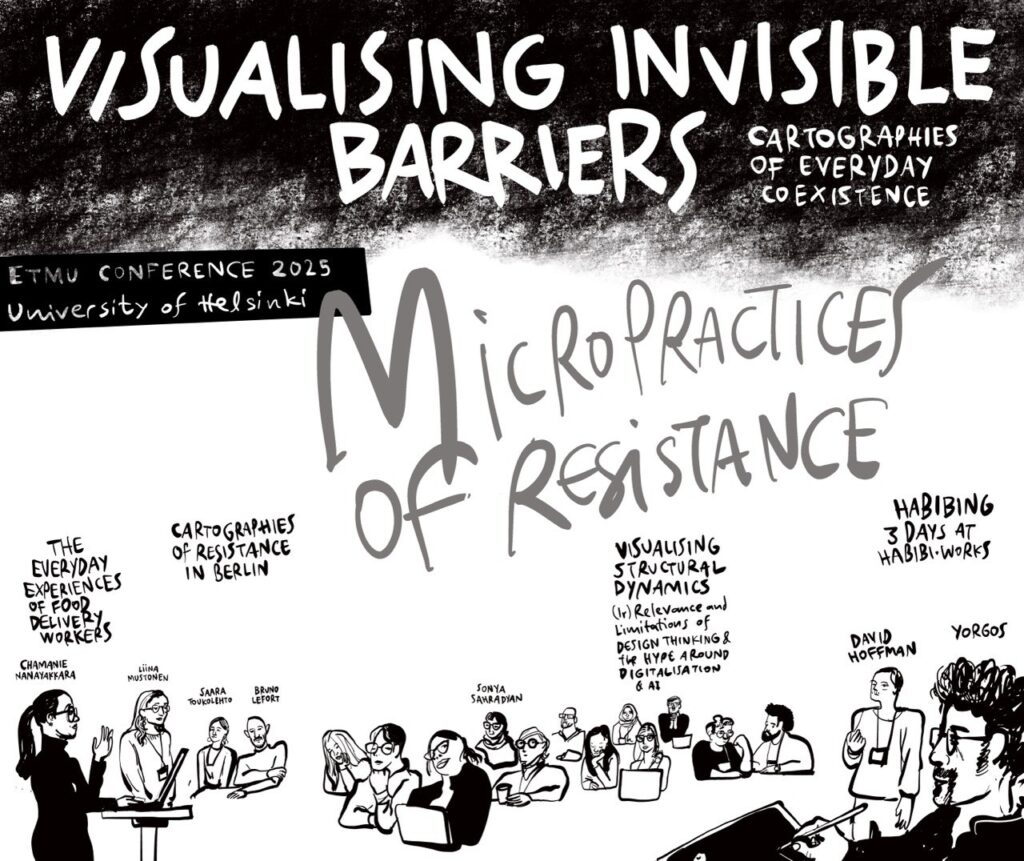
This piece, originally shared on the Co-Imagine Project blog, offers insight from three ETMU Members (Liina Mustonen, Saara Toukolehto and Bruno Lefort) with respect to themes that emerged through ETMU’s 2025 Conference in Helsinki. While wondering what constitutes meaningful scholarship in a “time of monsters”, the authors reflect on a workshop they convened to interrogate invisible barriers and the impact of terminology of categories that is often used to describe various facets of human migration. Drawing on critical migration studies, the piece suggests that these categories represent epistemic violence. The authors call for deconstruction and revision of common assumptions of these categories among migration researchers.  Using mapping and visual methods, workshop conveners encouraged inquiry into invisible barriers and alternative frameworks to offer researchers insight into expansion and ethical coordination of their research practice in migration studies. Check it out on the project blog, here!

Visualizing Invisible Barriers: Cartographies of Everyday Existence drawing from the conference.

Image Credit: Yorgos Konstantinou

Academic Interventions: Responsibilities of Scholarship in Polycrisis Conditions

Abstract birds-eye-view of institutional staircase.
Photo credit: davidpinter, CC BY 3.0 , via Wikimedia Commons
Lukuaika: 8 min.

by Melinda Russial

It has become commonplace to begin a persuasive piece with a litany of all the problems that sit at the center of the topic in question. I am starting to feel like every news article and every research article does this; it is exhausting to keep reading the same introduction, the same bullet points of tragedy, the same fruits of doomscrolling. I considered trying to find a different way to begin. But then it occurred to me that the fact that these litanies roll off of our tongues (or fingertips) so quickly and effortlessly is its own form of indictment of an epistemological framework that is floundering. As we try to make meaning out of chaos and absurdity, we weave together the details of these litanies with hyperlinks because it helps us feel like we are bringing order to the chaos. We are not. There is no order to the chaos I speak of today, but the litanies persist, demanding constant attention at the forefront of consciousness, in their full, unadulterated absurdity. Thus, I resign myself to the trend once more, in the service of drawing attention to new disasters in US-American higher education, as well as to what those of us working in educational and research contexts in Finland might be able to do to help model and sustain more just and world-building practices in light of these disasters:

In the year since the second election of Donald Trump as US president, the following happened (among many other scandals, tragedies, and ongoing genocidal complicities): The Corporation for Public Broadcasting was defunded; history is under erasure across the Smithsonian Institution; scores of US universities have defunded or disappeared DEI initiatives and programs, and are disciplining or expelling students for engaging in what previous eras have defined as lawful acts of protest; in response to government pressure, Columbia University adopted a new training requirement for students and faculty, based on the International Holocaust Remembrance Alliance’s controversial definition of antisemitism; Professor Rashid Khalidi withdrew a popular course in modern Middle East history in response to this policy change and other government-mandated changes; Northwestern University just settled with the administration for USD 75 million, caving to absurdist demands in order to regain their federal funding; major research grants for public and private universities have been cancelled because the government has determined that initiatives such as studying Black maternal health no longer support the ruling party’s emerging white supremacist priorities; The US President’s petty feud with Harvard University continues, including threats to revoke patents; the University of Chicago paused PhD admissions across the Humanities and in some Social Science programs; visas for international students across the US university systems are under continual threat of cancellation or denial, and those still interested in obtaining one are now expected to make their social media accounts public as a part of the qualifying process. And so on. 

I write today, in this watershed moment for US higher education, as a US-American scholar based in Finland. From this vantage point, and at this moment, I do not feel like there is much I can do about my country’s embrace of fascism on an overt political scale (although many others are working hard to resist every day). Creating a sense of stuckness and hopelessness is part of the fascist playbook, after all, and most days it feels like even those public officials who have taken oaths to represent our fallen democracy (those who haven’t embraced this fascist move for personal gain) have yielded to this hopelessness. To be clear, this is not a piece about preserving “American” values and US hegemony and fighting for a system that was always terminally unjust. Empires fall, and perhaps an empire built over the rubble of (at least) two genocides and inherently oppressive systems and structures does not deserve to survive in its present form. 

While I can imagine possibilities of a better world emerging from the collapse of late-stage global capitalism, as many decolonial scholars, artists, and activists have done before me, I do not accept the necessity of widespread grief and loss that are accompanying the conditions of imminent collapse as it begins to manifest in my country. I do not accept the horrors that have been increasing exponentially since the second presidential inauguration of a person who never should have been inaugurated a first time. Far too many people (globally, because of the tentacles of this empire’s reach) are hurting, dying, languishing in cages, separated from lifesaving medication, separated from reproductive health care, separated from loved ones, failing to thrive. I believe every single one of us who either holds US citizenship or is touched by it in some way is failing to thrive, while wondering whether collapse is imminent. 

What does this have to do with Finland, some might be asking? This is an essay for the ETMU Blog, and here I am, another US-American talking about the United States with the characteristic national narcissism that projects a stance that everyone in the world must be categorically and perpetually interested in what is happening in the United States. Finland is not, at this moment, collapsing. Finland is nervous about tariffs, nervous about Russia, nervous about unemployment rates, nervous about climate change; Finland is struggling with the rumblings of a re-emboldened far right, which brings with it a whole host of horrors. But, in my experience so far, Finland generally believes that it will get through the current landscape of global instability, even if the US manages to crash the global economy. This country invented SMS, after all, along with the dish drying cabinet and other brilliant gems of modern convenience, and many of its citizens go swimming in holes cut in the ice, for fun. (In other words, I am suggesting that Finnish people might be culturally predisposed to finding surprising opportunities for innovation and solutions to intractable problems.)

As an immigrant in Finland, I am negotiating entry into this creative and compelling country as I watch my country of origin descend into full embrace of the worst aspects of our long history of violence; many of us are struggling against despair to maintain connection to the legacies of resistance that have always accompanied that violence, and are finding ourselves feeling stuck. Many of us have new challenges to navigate that are taking much of our time and attention, and many are experiencing the (sometimes literal) death blows of new impossibilities that have arisen from old problems. Nonetheless, as an immigrant in Finland, I feel more hope than I have in a long time, as I learn to navigate the logistics and cultural differences of country where social welfare (mostly) works, where people generally treat common areas with respect, where people often choose to bike to work instead of using their car, where summer holidays are taken seriously and no one sends emails on vacation, where Everyone’s Rights allow for egalitarian access to berries and mushrooms and camping spots, where health codes and food safety are taken seriously, where employment is not a precondition of receiving lifesaving medical care.

Under the sheen of berry-picking, mökki saunas, and social safety nets, however, I also see hints of something more akin to the seeds of the US-American Fascist Experiment. Racially motivated stabbings in Oulu shopping malls. Bids to remove the work-from-home exemption in taxes. Increases in timeframes to qualify for permanent residency and labyrinthine asylum seeking procedures. Economic language employed to justify systemic racism. Name-based bias in hiring practices. The creep of US-style global capitalism and isolationism, and an increase in fascist noise.

Working opposite these trends, so far, is the country’s serious commitment to education and investment in knowledge in ways that sit deep inside the culture and the political structures of Finland, ways that my country has long since lost track of. While I don’t always agree with the details of policy, I can see why the Finnish educational system across the full human lifespan remains the envy of the world. This reputation carries responsibilities, for those of us working in fields of knowledge creation, maintenance, and dissemination in Finland, as we learn to navigate this latest stage in global-scale oppression and knowledge erasure. 

While I can’t yet see a way through the growing challenges of global polycrisis and the related impact of deliberate knowledge loss in my own country, I plead for those of us working inside the Finnish system to adopt three interventions:

  1. Practice Small Refusals

Push against neoliberal creep in small and large ways, whenever possible. Interrogate and challenge structures that sustain anthropocentric, world-breaking excesses of capitalism.

Challenge the primacy of publication counts. Write articles that need to be written, rather than articles with a primary motivation of increasing an author’s collection of titles. Write slowly, and read more. Read slowly. Read twice. Read backwards. Read across disciplines, and across time, place, and language. The knowledge of a single discipline is not enough for the work we have ahead of us.

Resist the urge to ask for article revisions that privilege “meta-text” and bullet point-style arguments. Resist calls for simplicity, and choose to embrace complexity – the challenges of our world are not simple, and simple solutions will not address them. 

Challenge concepts of “decorum” at times when it primarily serves as a tool for silencing. Say the thing that must be said. Aim to protect the agency of those who have been repeatedly harmed by the systems of injustice we work within, rather than the feelings of those who sustain those systems. 

  1. Commit to Preservation and Safekeeping of Justice-aligned Scholarship

Recognize that all education is political, and that the status quo is maintained by tendencies to experience it as “neutral.” Search for ways in which the “neutral” is anything but neutral, and name them, in writing, in teaching, and (perhaps especially), in meetings.

Scholars can say things out loud in Finland that are becoming increasingly difficult to say within the boundaries of the United States borders. Say them. Embrace the foundations and histories of “DEI” (critical legal studies, critical race theory, post/de/anti-colonial theories, gender theories, critical migration studies, Indigenous knowledges) in your writing and teaching as much as possible, as they are rapidly being stricken from the US legal system and historical record, and banned from US college campuses, their wisdom turned into Orwellian doublespeak tropes. 

Resist Eurocentric narratives of “both sides” logic, a tragic vestige of coloniality that persists in its objectifying hegemony. Sometimes there are ten sides. Sometimes there is one side, and we do violence to the conversation (and its material implications) by pretending that all opinions are valid. Sometimes they are not. 

Continue pushing Finnish universities to recognize the genocides in Sudan, Palestine, DRC, Myanmar, as well as the violences that are threatening to become genocides. Speak to these human-made global catastrophes in research and teaching with care and nuance.

For those empowered to do so, embrace authentic collaborations with scholars from locations of violence, war, genocide, climate catastrophe, epistemicides, and social and economic erasure. Sponsor these scholars on research visits. Embrace first author publications for these scholars, supported by the systems and financial backing of your neoliberal university, even (perhaps especially) when these scholars speak against its hegemonies. Hire them for permanent positions. Help them find housing, get their electricity turned on, arrange insurance, and figure out how to negotiate the ticket-taking machines lurking in every government office, pharmacy, and hardware store. Show them how to buy vegetables in Finnish grocery stores. If you have the means and the capacity to cultivate new friendships, invite these scholars to your summer cottage and teach them about löyly. And remember, doing this work is not a gift, and it is not a one-way flow of knowledge and expertise. It is an exercise in recognizing shared humanity. It is not exceptional, and it does not deserve special recognition; it is the bare minimum of academic justice. 

  1. Resist Narratives of Nordic Exceptionalism 

That thing that you are certain can never happen here, can happen here. And it will, if you ignore the rumblings of its emergence when it is still early enough to contain it. 

Learn from the failures of the United States. Eight years ago, a common refrain was, “There will be checks and balances on him. Congress will never let these things happen.” Five years ago, a common refrain was, “Well, the courts will protect us.” One year ago, a common refrain was, “No one will actually vote for him a second time.” And while I acknowledge that the problems in the US government are much deeper, with much longer histories, than one man’s narcissistic fantasies, we have seen repeatedly since January 20 how so many of his fantasies have become global realities by tweet-style, rage-filled, untempered decree.

In the words of Gwendolyn Brooks, “My last defense / is the present tense”, and in the words of bell hooks, “The heart of justice is truth telling, seeing ourselves and the world the way it is rather than the way we want it to be.”

May we continue to defend the role, promise, and ephemeral praxis of knowledge in pursuit of world-building justice.

***

References:

Brooks, G. (2006). Selected Poems. Harper Perennial. 
hooks, b. (2000). All About Love: New Visions. Harper Perennial.

Author Bio:

Melinda studies decoloniality and change agency in global education at the University of Oulu. Her work encompasses the intersections and entanglements of discursive, affective, ethical, and juridical spaces in justice-oriented institutions and educational initiatives. Melinda’s background as a professional musician and interdisciplinary arts and humanities teacher supports her commitment to traversing the borderlands of theory/method, art /science, and research/praxis. Melinda’s research and teaching is informed by currents in feminist, critical, and “post” theories and methodologies, with an interest in practical applications of contingent and relational knowledge.

Letting Go of Control: Reflexive Moments in Arts-Based Migration Research

abstract view of brightly-colored playground equipment
Lukuaika: 6 min.

Katarzyna Kärkkäinen and Sonya Sahradyan

Migration research raises important ethical and methodological questions—especially when working with vulnerable participant groups. Central to these concerns are issues of power and the researcher’s responsibility. Reflexivity—the practice of critically examining our own role, assumptions, and influence throughout the research process—is essential in this context. This is particularly true in participatory and arts-based research, which have gained recognition as  promising approaches in migration studies. These methods invite co-creative inquiry, but they also challenge researchers to reconsider their positionality and the boundaries of their role. The process of self-reflection can be disorienting—even anxiety-inducing—but it often leads to deeper insights into both the phenomenon under study and the research process itself.

Reflexive practice may feel especially uncomfortable for those who are accustomed to maintaining control over the research process. In collaborative arts initiatives, such control is not only elusive, but it may also have the opposite of the desired effect. Letting go of control can open space for more authentic engagement and shared meaning-making.

This reflection stems from participatory team ethnography with adult migrants in two different educational settings and critical reflection between the researchers involved. These conversations have been instrumental in deepening our understanding of what it means to research with rather than on migrant communities.

Exploring Workplace Learning and (Non)Belonging Through Collaborative Arts

We explored migrant students’ learning experiences in workplace settings, particularly within the social and health care sector within vocational education context. The research involves sustained collaboration with migrant students, vocational teachers, and workplace supervisors and employs a range of co-creative and arts-based activities to enrich data collection and engage participants meaningfully. One of our  art research workshops involved collaborative drawing to explore practices that support learning in workplace environments. This theme was identified from earlier observations and conversations with migrant students, teachers, and workplace supervisors, and was identified as central to the students’ lived experiences.

Figure 1. Drawing co-created by Al, Am, Helena and Jan 

A second workshop involved organising multilingual workshops with local residents of Jyväskylä representing diverse backgrounds, to engage in conversations about belonging and non-belonging across various communities—including workplaces—through creative and artistic methods. This session, devoted to the collaborative co-creation of a collage, served as a powerful medium for participants to express and explore their experiences, perspectives, and emotions related to different communities and inclusion.

Figure 2. Collage co-created by participants

Both workshops were followed by rich discussions, allowing participants to reflect more deeply on the topics of learning, belonging, and communities.

Co-creating Meanings, Doubts and Discoveries

While engaging participants in co-creative practices, migrant perspectives were placed at the center of the process. Yet, as facilitators, we had to acknowledge that we entered the workshops with our own assumptions and expectations. For both of us, facilitating the workshops became a journey of encountering and revisiting our expectations, uncertainties, and preconceptions—not only as facilitators but also as researchers experienced in co-creative inquiry and migration research. Katarzyna personally felt quite anxious about how the workshop would unfold. Would anyone show up? Would the activity be dismissed as childish by young adults and adults who have more serious things to do than drawing?

I was slightly nervous about how the workshop will go, if the students will draw and enjoy it, and if they will not be tired after waiting for a long time for other students. Eventually, we moved to the other building. On the way there, we met the last student too. To my surprise, students started quite quickly organize themselves: choosing the table that they want to work, gluing the paper to the table. After a short explanation of what we will do, everybody started drawing. […] I was surprised that everybody very quickly started to paint and draw. Am painting a tree, Jan something green, Helena something blue and Al drawing a tree. (Field Notes) 

Similarly to Katarzyna’s own experience, Sonya was surprised by the level of commitment shown by participants in her workshop. Everyone made the necessary arrangements to attend, and they actively engaged in both the discussions and the collage-making process. Before each workshop and workshop session we carried similar concerns. These worries, however, turned out to be unfounded.

Letting the Process Lead

At times we also had some expectations about how things should unfold, which topics participants might raise, whether these topics might be sensitive for them, and even some preconceptions about them as people. In Katarzyna’s workshop, participants chose to draw on a single sheet of paper but did so individually, which differed from what was expected from collaborative drawing. Instead of touching upon a wide range of themes, all four participants of the workshop focused on different aspects of the workplace atmosphere. Sonya also experienced similar disappointments. It came as a surprise to her that some participants were commenting briefly, writing one word or phrase on the hand and not necessarily raising the issues that she expected. However, we both noticed that in the discussion part, participants were active and discussed the topic in depth, raising insights that we never thought about, leading us to realize that it is important to trust the process. We noticed how much we were driven by the expectation of achieving a clear and content-rich outcome. Drawing or participation in the workshops for relaxation certainly disappointed us, as facilitators. However, over time, we started to see the value in drawing or participation even when done for fun. Gradually, the discussions in both workshops evolved into deeper conversations, often centered on diversity of experiences. This helped us realise that co-creative inquiry is not about controlling outcomes —it is about creating a space for participants’ voices to be heard and unexpected insights to emerge.

Further Challenging of Assumptions

We both discovered that we also had some presumptions about who might be interested in engaging in co-creative activities, and we worried that some participants might not have enough drawing and collage creating experiences and therefore might refuse to continue with the activity. To our surprise, all participants engaged fully and showed interest in drawing and creating a collage. In fact, the participant Katarzyna had been most concerned about seemed to genuinely enjoy drawing, creating a beautiful composition of trees. Similarly, other participants of the workshop were surprised by his drawing and curious about his artistic skills. Eventually, he smiled and reflected that he loves drawing and dreams of spending his retirement doing just that. In Sonya’s workshop it turned out that some participants had experience in creating collages and were eager to help others with the activity. Our worries about participants not having prior experiences and not engaging were completely unfounded. These cases made us reflect on how easily unconscious biases can sneak into our thinking—even when we believed we were being open and inclusive. These critical encounters with our assumptions reminded us of the importance of remaining open and being critical about our own biases, both as a researcher and facilitator.

Seeing Participants in a New Light

The drawing and collage creating activity allowed participants to show sides of themselves that might otherwise remain hidden from others and themselves alike. They weren’t just “migrant students” or “refugees”—they were artists, storytellers, experts on workplace learning and belonging, and individuals with dreams, talents, and meaningful experiences. These unrevealed identities and experiences came as a surprise to us, as facilitators, but also to some participants who were similarly astonished by their creative skills and stories that they could produce on topics discussed during both workshops. However, though we, the researchers, are usually knowledgeable and aware of broader discussions on reflexivity and researcher’s positionalities, knowing theory does not guarantee entering the field without any presumption and being fully open to participants’ insights, identities and experiences. We carry expectations about how people will behave, what they will say, and even what kind of knowledge will be co-produced. However, in participatory, arts-based research, we have to let go of some of that control. That’s not always easy.

To Conclude – So What?

It became obvious to us that, as researchers, we must acknowledge the existence of unavoidable power dynamics and unconscious presumptions that may subtly shape our thinking and interactions in the field. Engaging in critical reflection on who we are—and how our values, knowledge, experiences, and beliefs influence different stages of the research process and co-creating knowledge—can make us more sensitive to the meanings presented by participants, thereby enhancing the trustworthiness and credibility of the research. While engaging in collaborative arts-based research with vulnerable groups, reflexivity is not merely a methodological tool but an ethical imperative—one that demands humility, openness, and a willingness to be transformed by the research encounter.

References

Berger, R. (2015). Now I see it, now I don’t: Researcher’s position and reflexivity in qualitative research. Qualitative Research, 15(2), 219–234. https://doi.org/10.1177/1468794112468475 

Cutcliffe, J. R. (2003-01). Reconsidering Reflexivity: Introducing the Case for Intellectual Entrepreneurship. Qualitative Health Research, 13(1), 136-148. https://doi.org/10.1177/1049732302239416

Faulkner, S. L., Kaunert, C. A., Kluch, Y., Koc, E. S., & Trotter, S. P. (2016). Using Arts-Based Research Exercises to Foster Reflexivity in Qualitative Research. LEARNing Landscapes, 9(2), 197-212. https://doi.org/10.36510/learnland.v9i2.771 

Lietz, C. A., Langer, C. L., & Furman, R. (2006). Establishing trustworthiness in qualitative

research in social work. Qualitative Social Work, 5(4), 441–458. https://doi.org/10.1177/1473325006070288 

Moralli, M. (2024). Arts-based methods in migration research. A methodological analysis on participatory visual methods and their transformative potentials and limits in studying Human mobility. International Journal of Qualitative Methods, 23, 1–19. https://doi.org/10.1177/16094069241254008 

Watt, D. (2007). On becoming a qualitative researcher: The value of reflexivity. The Qualitative Report, 12(1), 82–101. Retrieved from http://nsuworks.nova.edu/tqr/vol12/iss1/5/ 

Katarzyna Kärkkäinen, PhD (Education), works as a postdoctoral researcher in the Finnish Institute for Educational Research at the University of Jyväskylä as responsible researcher and Co-PI of EU Horizon FEWL project—Enhancing Research on the Integration of Formal Educational Programmes and Workplace Learning (2023-2025). More information about FEWL project: FEWL-project  

Sonya Sahradyan, PhD (Applied Linguistics), works as a postdoctoral researcher in the Finnish Institute for Educational Research at the University of Jyväskylä. Her current research focuses on migrant participation in elections in Finland. She was also involved in the Crossing Borders project funded by the Academy of Finland (2017-2021), leading the Communities of Belonging workshop in collaboration with a youth work and community coordinator at the Multicultural Centre Gloria. More information about the Crossing Borders project: Crossing Borders

A War of Terror & the Trauma of Watching from Afar

Grass painting evoking Palestinian flag and watermelon slices.
Lukuaika: 9 min.

Manal El Mazbouh is a Lebanese PhD researcher based in Aotearoa New Zealand, with a current focus on the whys and hows of the implementation of educational management information systems (EMIS) in development contexts. Using a critical realist lens, she examines the implications of an increasingly data-driven culture that seeks to “quantify” education. Manal is actively collaborating with scholars in Finland, exploring how to navigate the intertwined roles of researcher, advocate, and activist—both within and beyond academia.

In a world marked by deep polarization and growing complexity, where personal and professional ethics, our sense of justice, and our very humanity have come under fire, navigating these roles and spaces has become deeply personal and pressing for her. As a migrant in New Zealand, Manal reflects on last year’s violent attacks on Lebanon and its people—an assault that persists today*—and the cognitive dissonance of witnessing it from afar.

*This piece was written in October 2024, yet its relevance tragically endures. The genocide in Gaza continues unabated, as do the bombings in Lebanon and Syria. Even more insidiously, the silence of many around the world in the face of these atrocities also remains unchanged.


2023 will forever in my mind be associated with the war on Gaza for reasons as many as the thousands who fell victim to the Israeli bombs. It was a singular, terrifying experience to watch people who looked like my parents, my grandparents, my siblings, uncles and aunts, my nieces and nephews suffer horror after horror, torn apart by bombs, burned by white phosphorus, disintegrated into dust, and even when buried in mass graves have their bodies desecrated after death. Seeing those faces kills a part of me every day; hearing the deafening silence of governments of the world, or worse, the statements of their ‘unconditional support’ for an ongoing genocide makes me feel like the world has forsaken its own humanity –  and lost its soul.. I watch building after building – cement, metal, and stone – crumple like a house of cards; utterly surreal – and I know inside those buildings, lives and dreams have ended, others ruined beyond repair. I fall asleep to the sounds of screams, the whistle of bombs, and then that eerie silence before the inevitable ringing explosion when they land – sounds I sadly know well from my own experience. For the past year, the images and stories coming out of Gaza have brought back these memories along with nightmares that feel eerily real.  I too sleep under the rubble every night, my voice hoarse, choking on my own blood, with planes and drones flying above me, and I too drag myself from under those blocks of cement every morning, crawling as I pulled the pieces of myself back together as best I can to face another day, only to find more of the same.

A year later, and it is my homeland that is embroiled in this war ( the second large-scale assault I’ve witnessed in my lifetime), and all the horrors I saw visited by Israelis on Gaza have been visited upon us– it is indeed the faces of my own people that I see, the devasted, fear-filled faces of my family and friends, places I recognize in our cities and villages destroyed or devastated beyond repair. Being myself away from danger, here in New Zealand, means that I am physically ‘safe,’ but everything I am, my heart and soul lies shattered into a million pieces, struggling to beat amongst a ravaged people on a ravaged land. I fear sleep; my dreams filled with the same horrors I see when I am awake. I no longer ask my family how they are – I just ask if everyone is alive; that is now the only measure of our existence. The rest of our brief phone calls are filled with silence – there is nothing left to say; all we can do is endure.

This new installment of the war of terror started on Tuesday, September 17th, 2024, when various devices, including pagers, walkie talkies and solar panels exploded over the course of two days, killing 39 and wounding over 3,250. These devices, used by doctors, deliverymen and countless other professionals, had been intercepted and planted with explosives then detonated– but few around the world called this what it was: terrorism, because it was directed at the faceless brown hordes of the Middle East.  On Monday, September 23rd, we entered into full-blown war, with the southern and western parts of Lebanon especially being targeted by Israeli airstrikes. Yet, few are aware of the human toll of the ongoing Israeli assault on Lebanon, devastating entire communities and destroying civilian infrastructure. The airstrikes have killed more than 1,100 people with nearly 10,000 injured; a million Lebanese civilians (one fifth of the population) have fled their homes in less than two weeks. Still, the world seems to be content to watch in silence. Or worse, portray this war of terror,  through the distorted lens of a biased narrative, where the deaths of the Palestinians and Lebanese are simply collateral damage.

It is a struggle to articulate the feeling of watching your country being attacked, to explain the guilt and the helplessness you feel, both of which are compounded by a cognitive dissonance on so many levels. A dissonance engendered by the disconnect between the terror you feel in your heart and mind as opposed to the safety of your physical being, by the conflicting desire to simultaneously remain in the safety of your current location and to return home to your friends and family despite the danger. It is also a cognitive dissonance of being forced to look at events through the distorting filter of the Western media – an account that is not just a misalignment between two narratives, but an insistence that what is happening to Palestine and Lebanon is right and good, no matter how barbaric or savage. A dissonance between the sanitized language of the Western media describing the ‘conflict,’ the ‘airstrikes’ and the ‘incursions,’ with no mention of the human cost, misrepresenting the visceral experience that I know my people in Lebanon are going through. Perhaps the greatest dissonance is continuing to hear the international community invoke human rights, call for respect for international law, and insist on a rules-based order while being unwilling, or worse, unable to say or do anything of real impact to uphold that law, those rights, and that order, to halt the bloodshed and slaughter that has been going on for 76 years. But perhaps it is because, to many around the world, there is no dissonance; it’s just news about a distant people in a distant land. Perhaps to them, our pain and our suffering does not matter, because they do not consider us human, so the world continues to watch us burn in silence and …turns away.


This is a follow up piece, written in August of 2025, which I refuse to dress in argument, analysis, evidence, or worse, in numbers. This is not an intellectual plea, but a reaching out, not as a writer to a reader, but as a soul weathered by sorrow and grief, speaking to another who might understand –  human to human.

On Bearing Witness

It’s been a struggle since October 2023, and now even more so, for me to understand the world’s engagement with the ongoing assault on Gaza and Lebanon. My struggle stems not only from the fear I feel as I watch my loved ones in Lebanon continue to be embroiled in this war, not even from the daily horror and agony of watching a genocide unfold live on our screens, but as a direct result of the apathy with which so many in the world have responded to the terrifying images of a people being deliberately, methodically tortured and erased. The responses I’ve gotten from some of the people around me since then, and the message we’ve been receiving worldwide with regard to the genocide is “Turn away. Nothing to see here folks”, as if this were normal. When I’ve expressed shock, pain and sorrow, as have others in real life and online, we’ve had people simply dismiss us: “Don’t put yourself through this; stop watching the news”  as if this game of pretend and denial means that the atrocities aren’t happening. Worse, others try to reduce it to personal involvement: “Make sure your family finds safety. As long as they’re okay you don’t have to be so upset.”  Is that what we are all doing now? Should we all just look away as long as it’s someplace else? As long as we and our loved ones are safe? 

I’ve always wondered at this ability to disengage, to just turn away – this is a privilege I’ve never had and a skill I never learned. How can I pretend not to see those suffering the reality of what I just described in Gaza and Lebanon? How can I pretend when they keep getting up day after day, despite the horror, the wounds, the losses of life and limb, the losses of hopes and dreams, the betrayal of the world that left them to their fate? How do I turn away when I see Palestinians hold on to their faith and thank God even when they bury entire families and children? How do I turn away when I watch them persevere, holding on to what’s left of their homes and families, risking life and limb to save the injured with nothing but their bare hands, to find food to feed their families despite the real and present danger, and doing it with such strength, dignity and compassion? How do I turn away from their continued pain and suffering? How do I turn away and remain human? 

And now that the Palestinians in Gaza are being systematically starved,  I want to turn away more than words can describe, not out of indifference but from sheer terror and anguish. I want to cower in a corner and hide from the images and stories of torture, death and starvation; from atrocities I feel complicit in not because of what I have done but because of what I have not been able to do. I have no words to describe the agony, the guilt and the shame that consume me as I bear witness to the suffering of the people of Gaza, as I watch them starve to death with food waiting just beyond the blockade, helpless to make any meaningful change. Every day I ask myself: Is posting enough? Is boycotting enough? Is telling people about Palestine and Gaza enough? Is going to marches enough?  I often look around with utter consternation – how can people just gloss over this and live their lives like nothing is happening?  What is it going to take to get people to see? To act?

I’ve attempted to engage with this ongoing assault through intellectual frameworks and scholarship, yet I feel frames of international law and human rights, and our academic claims of ethics and social justice, falter and collapse in the face of such relentless brutality. The ongoing nature of the genocide also makes it truly difficult to take a step back into theorizing; I find myself unable, and unwilling, to retreat into intellectual discourse. Also, in many spaces I fear intellectual and academic modes of engagement have succeeded in turning a simple, fundamental right – the right of a people to live and to do so with dignity and self-determination – into a labyrinth of false complexity and misleading nuance. To me, the clearest frame remains a human one. 

Within that frame, the Gazan genocide is a human catastrophe –  a test of our humanity that we are all failing. Perhaps it’s because we do not recognize that in many ways this is more catastrophic for the rest of us than it is for the Palestinians. The Palestinians in Gaza have had their lives and their very bodies systematically destroyed, but their spirit has remained undaunted, undefeated, and unmarred.  The rest of us, forced to watch and have every effort to stop this genocide thwarted, are the ones that who’ve had our spirits maimed and crippled – mortally wounded and damaged – in ways I feel more lasting because the powers that be made us complicit in their genocide and helpless against the utter depravity of it. Perhaps what this genocide has also shown is that many of us have grown so numb, so inured to the suffering of other human beings, that we that we no longer feel the blood seeping beneath our own skin.

I, for one, refuse to be numb. I’ve chosen and will continue to choose to bear witness to this horror, to bear the agony of watching and remembering, then and now, and to do what I can. I will not turn away from the nightmare the people of Gaza (and Lebanon) are living no matter the cost to myself – a price I willingly, consciously pay – because it is the least I can do. My people and the people of Gaza and every oppressed, persecuted people in this world (and there are many more than we choose to acknowledge) deserve more, infinitely more, than silence and apathy, but at the very least we deserve to have our suffering acknowledged and remembered because we matter – not because the world bestows mattering on us but because we simply, inherently, do matter.

Our pain and suffering deserve to be witnessed – that is the barest grace we are owed. We know no one is coming to save us – that is the truth that has etched itself into my bones over the last few weeks as I watched children waste into skeletons from hunger and people gunned down for the simple act of seeking food with barely a ripple of response worldwide. And that is the cruelest realization – that despite watching our suffering and death, the world still refuses to look at us, recognize our pain, or see us as human.  My only consolation is that I now understand that experiencing this anguish with and for a people being dehumanized, brutalized and annihilated every single day is all that allows me to remain somewhat … human.


June Jordan penned Apologies to All the People in Lebanon nearly twenty years ago, yet her words, her imagery,  the language and the narratives she portrays echo powerfully today in every story, report and photo emerging from Gaza and Lebanon and every story, report and photo about Gaza and Lebanon. I invite you to (re)read the poem here and perhaps consider how it speaks to and of the injustice we continue to witness.

The Tightrope of Reporting: Mainstream Media and Extreme Narratives

Photo by Austin Distel on Unsplash
Lukuaika: 3 min.

Author: Gwenaëlle Bauvois

When mainstream media reports on the viewpoints of anti-immigration and anti-vaxx groups, they grapple with responsibly and ethically presenting these perspectives while also avoiding undue amplification of their extreme messages.

Examining the consequences of mainstream media coverage of radical groups, as well of far right politicians, is certainly not a recent occurrence. As far back as the early 2000s, scholars were already analysing the impact of traditional media coverage in legitimising these actors and their actions. Additionally, journalists have long been reflecting on this crucial issue and interrogating their own practices when covering radical groups.

The ‘what’ and the ‘how’ of reporting

The central concerns revolve around both what is being reported and how it is being reported. What is being chosen to be reported can of course shape the reader’s perspectives and emotions regarding a specific subject. More importantly, we need to interrogate how certain actors – anti-immigrationists, anti vaxxers, far right politicians and radical right figures –  are being reported, especially how often, how much and how positively or negatively. 

This last point is particularly crucial: mainstream coverage of extreme actors is overwhelmingly unfavourable, yet this coverage can sometimes appear disproportionate, creating a magnifying glass effect. For instance during the 2015 -16 ‘refugee crisis’, anti-immigration groups – such as the Finnish street patrolling group Soldiers of Odin – attracted considerable media attention in Finland and abroad. Even though the mainstream media shone a negative light on this group, this extensive coverage contributed to move their vigilantism activities from the margins to international attention, leading to the creation of numerous chapters abroad. Without this spotlight, the Soldiers of Odin might have remained relatively confidential, confined to their local towns and marginal social media platforms. 

Similarly, during the Covid-19 pandemic, anti-vaxx groups and their leading figures received extensive mainstream media coverage. This is particularly observable in Finland where anti vaxx movements – both Finnish and international – were heavily reported on. The Finnish anti vaxx movement attracted a lot of media attention during the pandemic, especially in the Swedish-speaking regional press. This extensive reporting granted a raised public profile to anti vaxxers in regions where prior to the pandemic, vaccination rates were already lower than in other parts of the country and where the anti vaxx movement was already well-established. The increased public visibility of extreme actors can contribute to a heightened perception of their significance among the general public. The more powerful the media projection, the more it enhances the perceived credibility of these actors and movements.

Here lies the main paradox: the media’s ethical imperative is to report on potentially dangerous movements and its duty is to inform the general public about important societal issues. However, even when this coverage is ethical and critical towards extremism, it can inadvertently amplify extreme voices.

Gwenaëlle Bauvois holds a PhD in sociology and works as a researcher at the University of Helsinki (Aleksanteri Institute).  She has conducted research in diverse projects on e.g. post-truth politics; radical right movements; hybrid media and right-wing populism in different national contexts. As a visiting scholar at Stanford University (2023), she studied conspiracy theories in the USA. She is currently working in the Horizon project Analysis and Responses to Extremist Narratives (ARENAS).

References:

Bauvois, G (2023, July 25). The Vaccine Fighters. The normalisation of the anti-vaxx discourse in Finnish mainstream media. DiscourseNet (International Association for Discourse Studies) Congress. University of Valencia.

Brown, K., Mondon, A., & Winter, A. (2023). The far right, the mainstream and mainstreaming: towards a heuristic framework. Journal of Political Ideologies, 28(2). https://doi.org/10.1080/13569317.2021.1949829

Herkman, J. (2017). Articulations of populism: the Nordic case. Cultural Studies, 31(4). https://doi.org/10.1080/09502386.2016.1232421

Krämer, B., & Langmann, K. (2020). Professionalism as a response to right-wing populism? An analysis of a metajournalistic discourse. International Journal of Communication, 14, 23.

Pyrhönen, N, Bauvois, G & Rosenström, S. (2021). Soldiers of Odin as Peril or Protection? Hybrid Mediatization of Oppositional Framings on Anti-Immigration Responses to the ‘Refugee Crisis’, Nordiques. https://doi.org/10.4000/nordiques.1464

Reflections on Activism, Identity, and Hope: ETMU’s role in advocacy

Lukuaika: 3 min.

Author: Hibo Abdulkarim

Dear reader, I had to revise my text completely, due to current events, and while I will do my best to stick to a point, bear with me while I make several. 

6/2020 ETMU released a statement titled ” ETMU Stands in Solidarity with the Palestinian People”. Over 3 years later, we are again or maybe still, in a situation where this statement is relevant.

Slight intro first

I was brought to Finland as a refugee in 1990, as a toddler. I grew up outside of the capital, which meant growing up not only being a minority, but often being the only visible minority in the spaces I was in.

At home, my parents worked hard to instill in us pride about our culture, our religion and our roots, so we could stand firm when society tried to instill in us shame about every single thing about us that made us us.

My teenage years were spent trying to find myself, which meant a deep dive into hip hop and everything it stood for. Regardless of learning about the struggles black people had to face before and living with what we faced in 90’s Finland, my earliest memories of civil activism had surprisingly nothing to do with racism. Not directly anyways.

Activism and me

I don’t remember how old I was when I first learned about Palestine and its history, but a lot of my teenage pictures show me wearing the keffiyeh around my neck. I remember the first time my mother asked me not to wear it outside, for fear of my safety. And I remember how proud I felt when at university I got to attend my first pro-Palestine demonstration, wearing my old keffiyeh, and chanting in solidarity with the people of Palestine, demanding peace.

This week, over 20 years since my mother asked me to stop wearing the keffiyeh, because she was aware of the risks involved, I attended my first demonstration for Palestine in Finland and I felt nothing but grief. I briefly marched along side a woman old enough to be my grandmother, who is Palestinian and while she cried, I couldn’t help but cry too; at the cruelty her people feel and have felt for over 75 years.

ETMU and the future

ETMU gives me hope. To see a wide network of academics and researchers, who work to produce studies that Finland and Europe at large, greatly need, give me hope. To have people who study e.g.: migration, refugee’s, racism, apartheid and discrimination and want to make a positive change in this country and in this world is valuable beyond words.

As a black, muslim refugee, I’m used to being discussed in different public platforms as a problem. In the work/papers I have gotten to know through ETMU, I see discussions about minorities and immigration, but in a scientific, neutral or humane way, where the subjects are still people, with right to dignity.

I hope that in the future ETMU gets much more space and recognizition in academics, not only for the value of networking, but how valuable these discussions are specially for those who do not work with the topics ETMU does.

In a time where we still have to justify the need for antiracism in universities and in workplaces, ETMU could be beacon of light that the academics absolutely needs to show us the way.

Despite being a medical doctor, I don’t regard myself as a true academic, since my experience actually doing research is very limited. However, while working in the antiracism field for the last few works as a stressful but necessary “side hustle”, I welcome any and all research based information we can get to further equality and human rights.

Especially in situations, where things are not black and white, the importance of terminology and accuracy is amplified and researchers have one of the most important roles in producing means to fight injustice.

I stand with the oppressed, with the discriminated, with the occupied, because I stand with the right of every single human being to be treated with dignity and to feel safety. 

Happy 20th ETMU!

Hibo Abdulkarim,
medical doctor, antiracism specialist, social media [health & equity] influencer

Over 30 years in Finland, but still identify quite strongly as Somali first and Finnish second. I work as a doctor and in the antiracism field, mainly in medicine where I work to advocate for minory groups and their rights while teaching about racism and training professionals on all thing’s equity. Most of my activism is done through Instagram, where my husband and I create content about health, mental health and equity issues, while most of my teaching is done in person. I am planning to regain my identity as a “full fledged” academic, in the form of starting my doctorate soon, which will be focusing on the clinical impact of structural racism in medicine and healthcare. I look forward to graduating from an admirer of ETMU, into a member of it.

Maahanmuutto ja tutkimuksen voima: ETMU:n 20-vuotisjuhla ja tulevaisuuden haasteet

Lukuaika: 2 min.

Kirjoittaja: Elina Pirjatanniemi

ETMU juhlistaa tänä vuonna 20-vuotista taivaltaan. Oman kokemukseni mukaan parikymppiset ovat sangen innostavaa seuraa. Elämänkokemusta on jo jonkin verran, mutta tulevaisuus on vielä avoin ja kaikki on mahdollista. 

Parikymppinen ETMU on samoin vakiinnuttanut asemansa tieteellisenä seurana ja uskon vahvasti, että sillä on paljon annettavaa jatkossakin. Miksi oletan näin?

Maahanmuuttoon liittyvät kysymykset ovat niin tärkeitä, että on oikeastaan melkein naurettavaa todeta, että ne ovat tärkeitä. Kuten tiedämme, maahanmuuton syyt ja seuraukset ovat moninaisia. Ne herättävät tunteita, toisinaan pelkoakin, ja kiihdyttävät poliittisia reaktioita. Suomen osalta tilanne on paradoksaalinen: yhtäältä tiedämme, että yhteiskuntamme kaipaa kipeästi muun muassa työperäistä maahanmuuttoa. Haluamme tänne kansainvälisiä osaajia, start up- yrittäjiä ja työntekijöitä eri alojen työvoimapulaa paikkaamaan. 

Toisaalta asia on poliittisesti kimurantti, koska hallituksemme kokoonpano on mikä on. Hallituskoalitiossa on täysin vastakkaisia käsityksiä maahanmuutosta, mikä on heijastunut luonnollisesti myös hallitusohjelmaan. Yhdeksi Suomen Akatemian yhteydessä toimivan strategisen tutkimuksen neuvoston vuoden 2024 ohjelmateemaksi oli valikoitunut työperäinen maahanmuutto. Kuvaavaa on, että asian valmistelu jumittui nimenomaan valtioneuvostossa. 

Yhteiskunnallisesti elintärkeitä kysymyksiä tulisi lähestyä pitkäjänteisesti ja tutkittuun tietoon nojautuen. Tältä osin Suomella on vielä pitkä matka edessään. Maahanmuuttoon liittyvät teemat ovat muuttuneet poliittisiksi pelinappuloiksi, joiden kohdalla pitkäjänteisyydestä ei ole tietoakaan. Tämä näkyy selvästi oikeudellisessa sääntelyssä, jota itse työssäni seurailen. Ulkomaalaisten oikeusasemaan vaikuttavia keskeisiä normeja muutellaan sitä mukaa kuin hallitukset vaihtuvat. Perheenyhdistämistä koskevat säännökset ovat tästä hyvä esimerkki. Yksi hallitus vetää yhteen suuntaan ja seuraava sitten toiseen. Tutkijat yrittävät tuottaa ymmärrystä muutosten vaikutuksista, mutta harvemmin isoa kuvaa saadaan tutkimuksilla nopeasti muutettua.

Demokraattiseen päätöksentekoon kuuluu osana tietenkin se, että hallitus vie ja muut vikisevät. Edustan itse kantaa, jonka mukaan ihmisten perus- ja ihmisoikeuksia sivuavissa kysymyksissä, kuten esimerkiksi perheenyhdistämisessä, hallituskaudet ylittävä harkinta olisi kuitenkin hyvin tärkeää. Osaan perustella tämän oikeudellisesti, mutta se ei riitä vakuuttamaan päättäjiä. Tarvitsemme jatkuvasti monialaista ja monipuolista tietoa maahanmuutosta ja maahanmuuttajista sekä siitä, miten yhteiskunnallinen päätöksenteko lainmuutoksineen ilmiöön ja ihmisiin vaikuttaa. ETMU:lla on tässä erittäin keskeinen rooli, jonka merkitystä ei voi tarpeeksi korostaa.

Muuttoliikkeiden ja etnisten suhteiden tutkijoilla riittää siis töitä tulevaisuudessakin. Yhteiskunnallinen ilmapiiri ei juuri nyt helpota alan tutkijoiden työtaakkaa. Laadukas tutkimus itsessään on aina vaativaa, olipa ala mikä hyvänsä. Monet ETMU:n tutkijoista joutuvat myös painimaan tutkimuksen ulkopuolisten haasteiden parissa. Miten saada tutkimusperustainen viesti perille aikana, jolloin yhä useampi kyseenalaistaa tieteen integriteetin? Miten kohdata vihamieliset viestit ja maalituskampanjat? 

Minulla ei ole valmiita vastauksia. Varmaa kuitenkin on, että kukaan tutkija ei jaksa yksin tällaisia vaikeuksia kohdata. ETMU:n tärkeä merkitys ilmenee tässäkin. Seuran kautta oma viesti saa kaivattua kaikupohjaa. ETMU tarjoaa myös tukea ja kumppanuutta hankalissakin tilanteissa. 

Me tutkijat kasvatamme ymmärrystä yhdessä tehden, tutkimus ja projekti kerrallaan, kärsivällisesti ja asiantuntevasti. Näin on ETMU menestyksekkäästi tehnyt ja näin ETMU tekee jatkossakin. 

Kahteenkymmeneen vuoteen mahtuu paljon onnistumisia ja läpimurtoja, onnen hetkiä, jolloin tutkimus on saanut aikaan positiivisen muutoksen. Aina sitä ei voi suoraan todentaa, mutta tieto oman panoksen merkityksellisyydestä antaa voimaa.  Toiveikkaina ja innokkaina lähtekäämme siis kohti seuraavaa vuosikymmentä!

Elina Pirjatanniemi on oikeustieteen tutkija ja professori sekä Åbo Akademin ihmisoikeusinstituutin johtaja. Hän on tutkimuksessaan paneutunut muun muassa turvapaikanhakijoiden oikeusasemaan ja ulkomaalaislakiin. 

Stay courageous, disobedient, and self-critical

Lukuaika: 2 min.

Kirjoittaja: Johanna Ennser-Kananen

After being on the ETMU board for 3 years, I took on the role of ETMU chair from 2021 to 2022. Today I look back at this intense time with mixed feelings. There was always more to do that could be done, there was never enough time, and rarely enough money, and great ideas and initiatives were often met with the harsh realities of neoliberal, racist, and otherwise dehumanizing academic and societal structures. But, in the end, the good things outweighed all of those. I offer two examples here: ETMU taking a stance and ETMU creating humanizing spaces. 

My time as chair was quite a restless one, both in Finland and globally: To name only a few, COVID, restrictive migration policies, and wars and violence (e.g., against Palestinian people, Ukraine, and people in North and East Syria) changed many lives and places forever. In the face of these major crises, ETMU did not look the other way: Whenever possible, we took a stance (often in writing), dealt with the topics on our blog (e.g. this piece on the COVID crisis https://liikkeessaylirajojen.fi/covid-19-pandemic-what-has-it-meant-for-mobilities-and-inequalities/

or the one on the Ukrainian refugee crisis https://liikkeessaylirajojen.fi/special-issue-war-in-ukraine-and-perspectives-on-forced-migration/), and made space to work through our experiences in events and meetings. I hope these initiatives will continue and develop further. Like Desmond Tutu reminded us, there is no neutrality in the face of oppression, so I hope ETMU will continue to use its voice in nuanced, clear, and courageous ways. 

ETMU taught me many things, and one stands out as particularly crucial. The people I met in my active ETMU years included many who understood what I was only beginning to learn: that universities are fundamentally nationalistic, colonial projects, and the hierarchies within them are not a coincidence or an accident, but very much part of how the system was designed to work. But, importantly, I learned that, in this context, it is possible and necessary to carve out spaces for resistance, solidarity, connection, and activism. That people are often better than their institutions, and if given the opportunity, they will build and maintain these spaces. In today’s Finland, and today’s academia, we need these people, the ETMU-type, the builders, connectors, resistors, humanizers, more than ever. Thank you, ETMU, for all the experiences, lessons, and connections. Stay courageous, disobedient, and self-critical. Happy birthday! 🎉

Johanna Ennser-Kananen (Ph.D, dos.) works as an Academy Research Fellow at the Department of Language and Communication, University of Jyväskylä researching the intersections of language, knowledge, and racialization in schools.

Luetuimmat